Low code, no code

Whether you are a manager or a developer in InsurTech, you might have heard about “low code” and “no code”. In any case, here is an article that you might find interesting:

“Low code is a development movement where time-consuming manual processes are automated, without hand coding, using a visual IDE environment, an automation that connects to backends and some kind of application lifestyle management system. The whole unit is called a “low code platform”

Read on at https://www.bmc.com/blogs/low-code-vs-no-code/


Read More

Sylvie Meis, COACHREMOTELY

Moderatorin Sylvie Meis erzählt, warum COACHREMOTELY die heißeste Coaching-Plattform ist

At INGAGE, we are very proud that COACHREMOTELY has chosen our platform to host its online academy.

Thanks for your trust!


Read More

Agile, Lean, SCRUM?

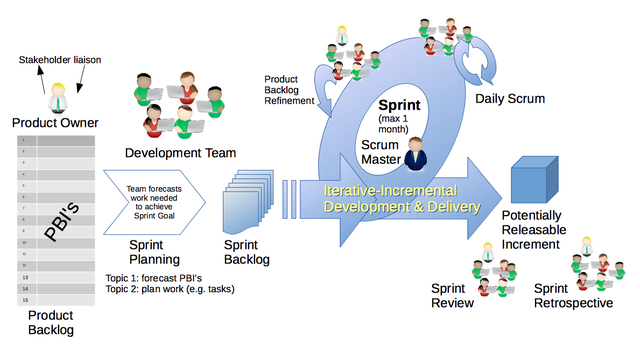
If you have spent a bit of time with IT developers or project managers, you might have heard of “Agile”, “SCRUM”, “Lean”. These are key concepts and, in our experience, a must for any young and fast-growing company.

Here is an introduction that might interest you: https://www.mitchlacey.com/intro-to-agile/scrum/the-sprint-cycle


Here is also an overview of Agile software development principles:
(source: https://en.wikipedia.org/wiki/Agile_software_development)

The Manifesto for Agile Software Development is based on twelve principles:

  1. Customer satisfaction by early and continuous delivery of valuable software.
  2. Welcome changing requirements, even in late development.
  3. Deliver working software frequently (weeks rather than months)
  4. Close, daily cooperation between business people and developers
  5. Projects are built around motivated individuals, who should be trusted
  6. Face-to-face conversation is the best form of communication (co-location)
  7. Working software is the primary measure of progress
  8. Sustainable development, able to maintain a constant pace
  9. Continuous attention to technical excellence and good design
  10. Simplicity—the art of maximizing the amount of work not done—is essential
  11. Best architectures, requirements, and designs emerge from self-organizing teams
  12. Regularly, the team reflects on how to become more effective, and adjusts accordingly


Enjoy the reading!


Read More

Blockchain in the insurance sector

PwC

“22% of insurance, asset and wealth management business is at risk to disruption from FinTechs according to our Global FinTech survey. Almost three quarters of insurance leader surveyed in the survey considered that insurance would be the most disrupted industry. Meanwhile, complex processes with multiple interactions, duplication of data entry and risk of fraud slows down traditional players’ ability to react.” PwC

Source: https://www.pwc.co.uk/financial-services/fintech/assets/blockchain-in-insurance.pdf

Read More

The Board Game Generator

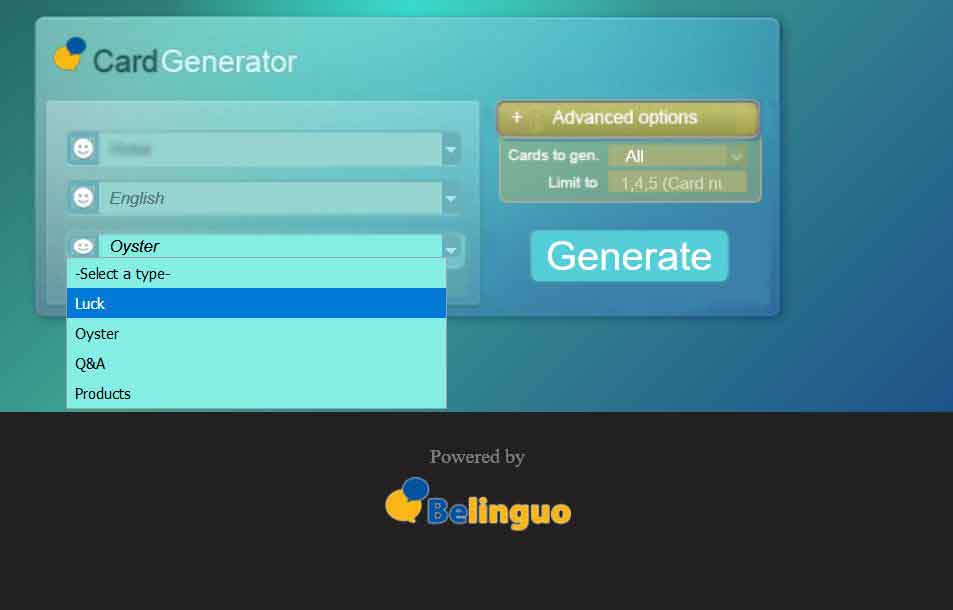
Our tech team has developed a Board Game Generator that makes it possible to do the whole process of board game card generation automatic.

No lengthy projects anymore. Generate or re-generate the whole set of cards as needed!


Read More

Burnout and insurance companies?

Help your employees gain their full potential and avoid burnouts

1 employee in 5 considers her/himself to be tired or lacking energy. Most employees also report a high level of tiredness after lunch.

What if we could offer your employees to have a high level of energy the whole day long?

The general lack of energy as well as the post-lunch fatigue represent a substantial loss of productivity for companies and stress for employees.

This online module will guide employees through a quick analysis of their present situation, their needs and will give a first assessment of their present level of fitness as well as solutions easily implementable within minutes and measure quickly the result: more energy and more productivity. According to NASA, some strategies can improve by up to 35% employees’ reactivity and productivity in the afternoon.

(Only available in French for now. English, German, Spanish, Italian roll-out scheduled for 2020)

Stéphane Tétart, naturopath, is the author of several books about health and well-being, including “Stop the fatigue” and the best-seller “Secrets of naturopaths”. He has helped people regain their full potential and productivity at work for more than 10 years after experiencing a burnout himself.

Read More

The Digital Nomads of Insurance

This video about some of our co-founders – the “INGAGE Brothers” – shows that they also “Think Different” in their daily lives. INGAGE’s concept of a “virtual first” company with digitization of all its processes is at its core. 


Read More

Entrepreneurship course

Avila Space’s Entrepreneurship course!

Avila Spaces and INGAGE partnered up to create this course specially designed for people in insurance companies and other industries to boost their entrepreneurial spirit.

The course aims to directly reply to simple and/or complex questions that Entrepreneurs live on a daily basis independently of success or failure. The entrepreneurial spirit and the constant decisions around financial and economical risk or the possibility of investing in new ventures were some of the essential drivers for building this course.

This course is designed to help students to evaluate the business skills and commitment necessary to successfully operate an entrepreneurial venture and review the challenges and rewards of entrepreneurship.

Check out this video: www.youtube.com/watch?v=FEWWL33EFhA.


Read More

Our 5 secrets to learn efficiently

We love learning!

However, one of our passion during our spare time is to learn languages. Here, our colleague Marion Gioda, shares her insights taking languages as an example.

So you’ve tried your hand at language learning a couple of times, and each time you’ve come up with great reasons why you just can’t learn:


“It’s just not for me”

“I’m just not good at learning languages”

“Language learning is a natural talent and that I just don’t have”


Ultimately, you gave up.

You know at heart that if you spoke even a little bit to your business partners or clients in their own language, they would perceive you in a different way.

You also know this skill could help you differentiate yourself from your competition and win clients.


DID YOU KNOW?

Chinese TV channels even have programs

where they celebrate foreigners speaking Chinese

such as singing competitions and talk shows.


You are a busy professional and if it’s going to be torture, why even try? We get it.

But you know what? We too, are busy professionals, and our team speaks 15 different languages.


The secret that rules them all: applying business principles to language learning.


We know you are reading this and going “huh???”. Well, let us make our case.

Isn’t it safe to say that the business world has benefited from years of optimization of time and resources?

And, isn’t it also safe to say that the way we learn things – above all languages – doesn’t quite feel like we are making the best of our time and energy?

Have you ever wondered what would happen if you applied the very same principles of a well-run business to language learning?

There is a way to learn any language you want effectively and well!

We are excited to share with you our 5 secrets that translate into simple steps to learn any language you may dream of and have your clients’ jaws drop next time you meet!

Sign up here to discover our 5 secrets.

Read More

Helping the training community

This week we are helping a member of the Effective and Fun Training Techniques Group on LinkedIn to tackle an interesting topic.

Below you will find her question, and our answer to her 🙂

“What is the best way to keep people interested? Going from teaching 7th graders to teaching adults has been a difficult transition for me. Something I am really struggling with is shifting the focus of the training session from me talking to whole time to getting the people involved. It has become mostly me talking at them, and them asking questions. But i do not know how to get it to be more of a conversation. Any ideas? Thank you in advance!” (from Maria Morlando, Director of Training and Development at Enjoy Your Party Franchising, LLC., Effective and Fun Training Group, LinkedIn)

“Dear Maria, {…} Introducing interactive tools is key to be able to engage adults. Also I find asking them questions about what they think is much more productive than simply giving them the solution.

As a corporate trainer, I always try to shift my behavior from the “teacher” (who needs to pretend he/she knows it all – which is unfortunately what we do with kids) to the “coach” who is here to mentor them in their learning journey.

Adults – and kids – can learn most things on their own and need a coach to help them stay on track, inspire and challenge them. This also makes it so much more enjoyable and relaxing for the trainer (you) because you feel like you are here for the added-value stuff, not just repeating the same information over and over again.

I have also been experimenting with “group self-learning” lately and it works wonders: people in small groups learn together. Naturally the stronger elements of the group will help the weaker ones!”(from Marion Gioda, COO, Belinguo)

Read More