 Written by thebrokernews8 January 2026
 Robotaxis are coming – The world of driverless cabs
Source: thebrokernews
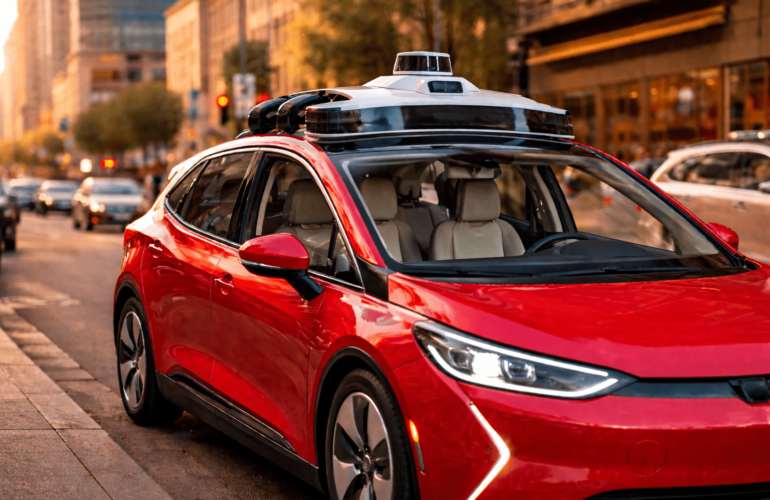
Driverless cabs have moved from the test lab to everyday urban life. They are already operating commercially in several cities around the world, in some cases without safety drivers. Switzerland is also preparing to get started. A look at international experience shows what is possible and where the limits still lie.
In the USA, the West is considered a pioneer. Driverless cabs have been in everyday use in Phoenix for years, and are now also in operation in parts of the San Francisco Bay Area, Los Angeles, Phoenix, Austin and Atlanta. The operator is Waymo, a subsidiary of Alphabet. The vehicles operate without safety drivers, rides are booked via app and are part of regular traffic. Las Vegas is also one of the early deployment locations: Zoox, an Amazon company, is testing autonomous vehicles in a clearly demarcated area on the Strip.
China is the second major arena. Since the launch of Apollo Go in 2020, autonomous cabs have already been driving without a driver in cities with millions of inhabitants, such as Wuhan and Chongqing, as well as 13 other cities. The services are publicly bookable and are actively supported by the local authorities. China is thus deliberately focusing on rapid scaling in urban areas in order to gain experience with autonomous fleets. The fleet and range has been expanded to over 11 million trips for passengers by May 2025 with 1,000 self-driving vehicles.
Further projects exist in Singapore, in individual Japanese cities and in the Middle East, for example in Abu Dhabi. What all these locations have in common is that the vehicles will initially operate in defined zones and their areas of operation will be gradually expanded.
Experiences from everyday life
Experience to date has been ambivalent. Users report smooth, predictable journeys and a high level of compliance with the rules. Especially in heavy city traffic, robotaxis drive more defensively than human drivers. Operators point to millions of autonomously driven kilometers and accident rates that are lower than those of human drivers.
At the same time, everyday life also shows the limits of the technology. Complex traffic situations, roadworks, unclear hand signals and extreme weather conditions remain challenging. In San Francisco, the provider Cruise came under pressure after several incidents, including a serious accident involving a pedestrian. This resulted in temporary driving bans and a significant setback in expansion. These events have intensified the regulatory debate worldwide and made it clear that autonomous mobility remains politically sensitive.
Focus on safety and liability
Accidents involving autonomous cabs are rare so far, but they have a high media impact. This is precisely why safety concepts, remote monitoring and clear liability rules are at the center of the discussion. In most markets, it is the operators and not the passengers who are liable. Insurers are keeping a close eye on developments, as risk profiles, loss frequencies and responsibilities are likely to change fundamentally.
And Switzerland?
Driverless transport is also coming closer in this country. Since 2025, the legal framework in Switzerland has permitted the operation of automated vehicles without drivers, provided they are approved by the authorities and operate in clearly defined areas. The first pilot projects are underway, including at the Swiss Transit Lab, where autonomous cabs are being tested in suburban communities.
At the same time, public providers are making preparations. PostBus is planning to use driverless vehicles from 2027, particularly in rural areas, in order to cover the last mile more efficiently. Test drives already started in December 2025, while international providers are looking into entering the market, initially not in large cities but in manageable areas with low traffic density.
A gradual transition
Widely available robotaxis in cities such as Zurich or Basel are not to be expected in the short term. A gradual expansion with pilot zones, limited operating times and close supervision is more likely. International experience shows: A lot is possible in terms of technology, but it will take time in terms of society and regulation.
Changes for the insurance industry
The introduction of driverless cars will fundamentally change the mobility and insurance industry. Falling accident figures are calling traditional risk models and premium structures into question, while new liability issues are affecting manufacturers, software providers and vehicle owners. For Swiss SMEs, this presents both pressure to adapt and opportunities: those who invest early in digital skills, new business models and collaborations will be able to position themselves successfully in a rapidly changing value chain.
Driverless cabs do not arrive abruptly, but quietly, section by section. And this is precisely their greatest challenge.
Binci Heeb
Read also: Tesla now with car insurance – also in Switzerland?